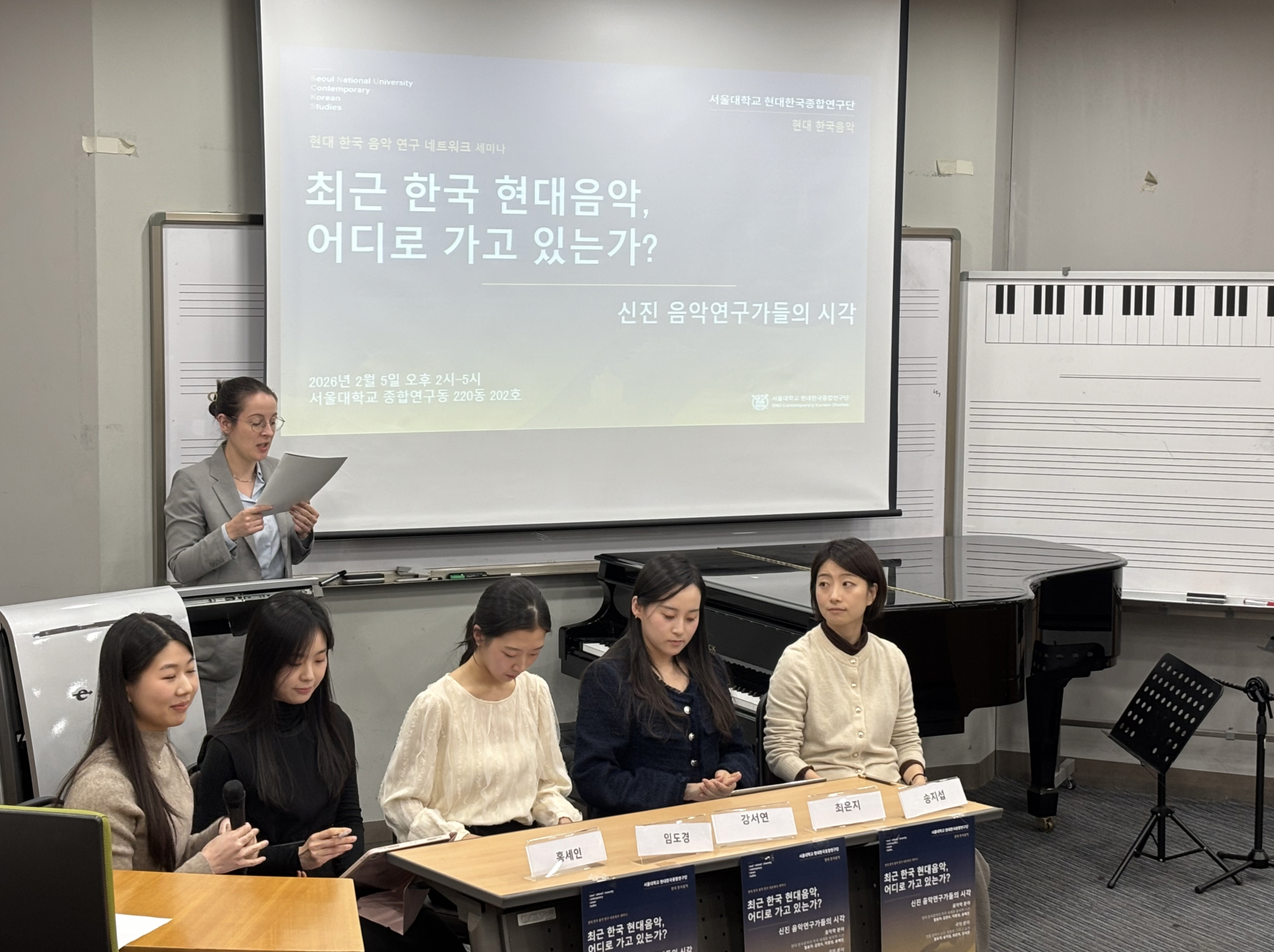
On February 5, 2026, from 2:00 to 5:00 PM, the “Contemporary Korean Music Research Network” seminar was held at Building 220, Room 202, Seoul National University, under the theme “Where Is Contemporary Korean Music Heading Today? — Perspectives of Emerging Music Researchers.”
This seminar was organized as a student-centered research forum, bringing together perspectives from both musicology and Korean traditional music (gugak), and providing a platform for emerging scholars to present their research and engage in academic discussion.
The seminar was structured into two sessions.The first session focused on musicological approaches to contemporary Korean music. Kim Yeonsu examined composer Eugene Sun Jin’s Naturalism (2012), analyzing how Western instruments and compositional techniques can represent Korean nature and everyday soundscapes. The presentation highlighted the use of heterophony and natural sound materials as strategies for re-establishing communicative accessibility in contemporary Korean art music.
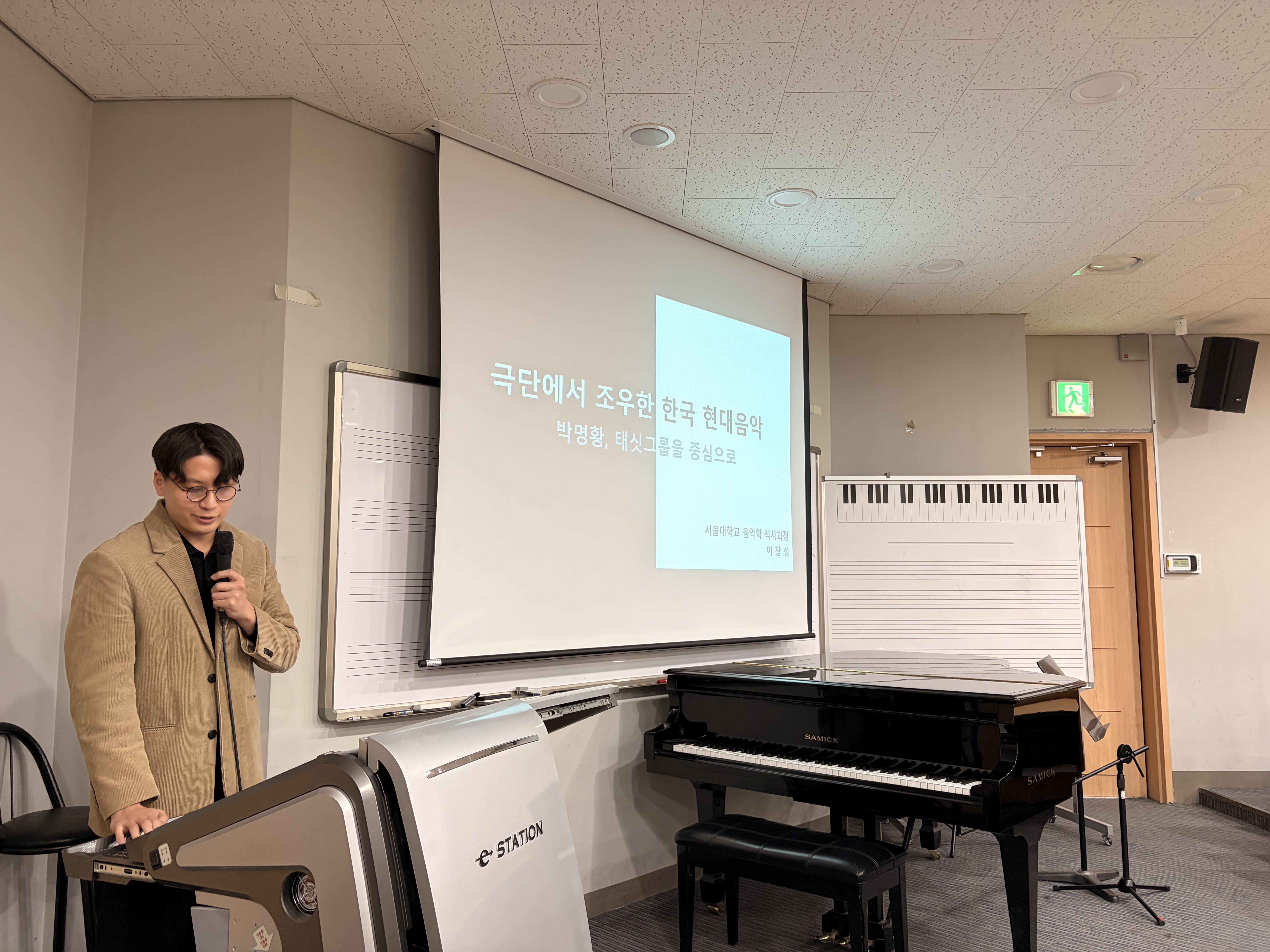
Lee Chang-Seong explored the intersection between gaming culture and contemporary music through the works of Park Myung-Hwang and the activities of the Tacit Group. The presentation argued that the integration of game elements into contemporary music goes beyond thematic borrowing, instead redefining the roles of performer, composer, and listener, as well as the process of musical creation itself.
Song YeJin examined conceptual and sensory shifts in contemporary Korean composition through the works of composer Park Sung-Mi. The presentation focused on how timbral organization and structural design create “designed sensations,” and explored the evolving relationship between listening and writing in contemporary Korean music.
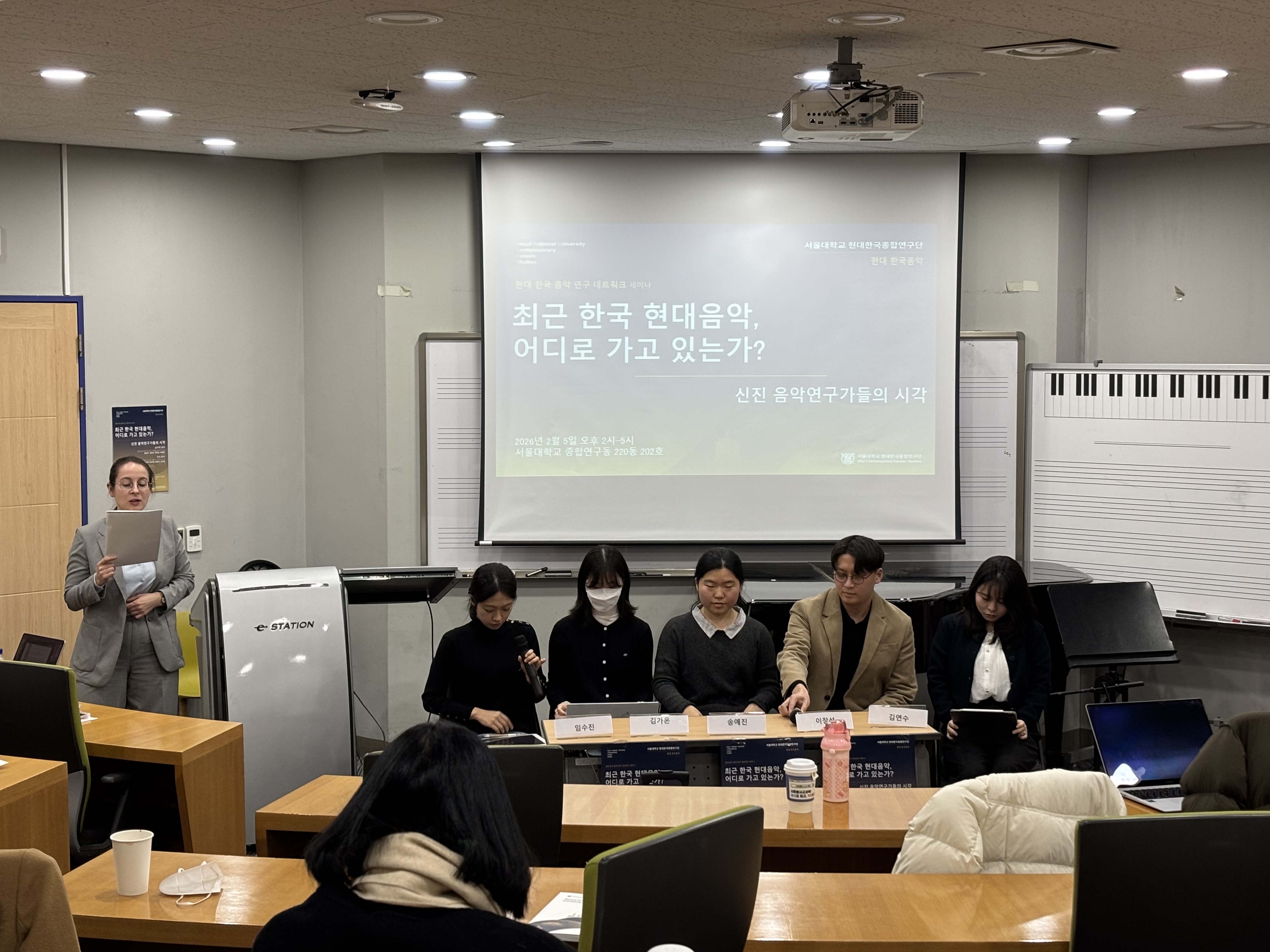
The second session focused on the intersection of tradition and contemporary creation in gugak composition and performance research. Song Ji-Seob presented compositional methodologies based on silence and micro-sound through his work Gravity II, exploring how Korean traditional instruments can reshape perceptions of musical time and auditory experience.
Choi Eunji discussed the role of the performer as an active interpretive researcher through the premiere performance process of a contemporary haegeum solo work, emphasizing performance as a research methodology.
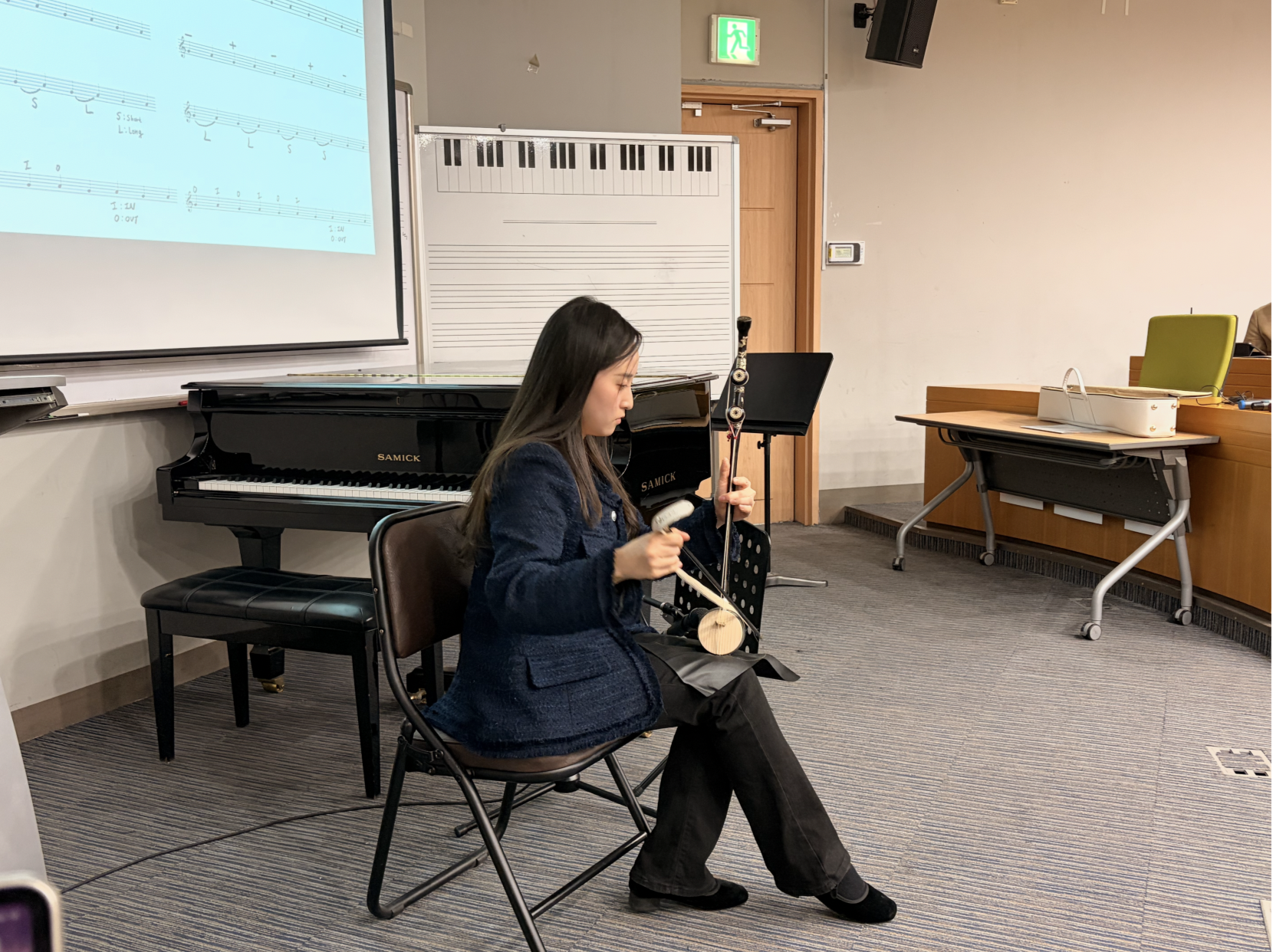
Kang Seoyeon analyzed Han Beom-Soo’s haegeum julpungryumelodies, highlighting diversity in performance interpretation and the role of individual musicality within transmission traditions.